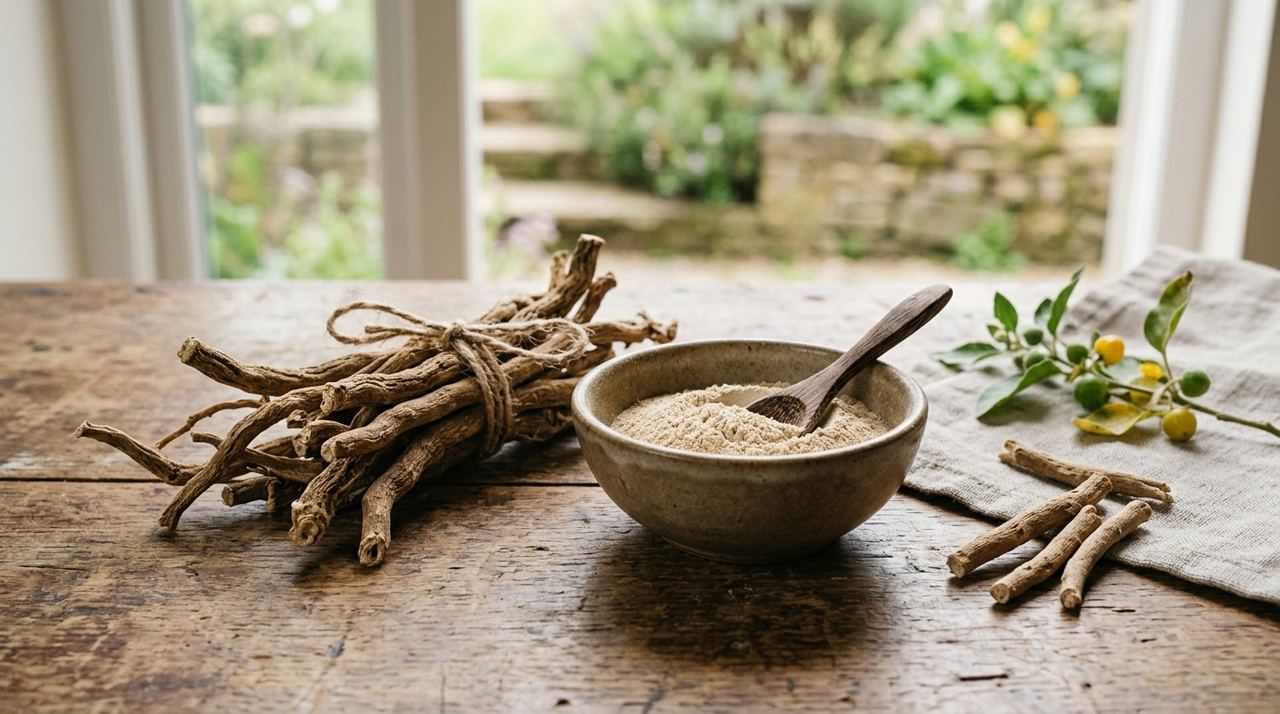
Ashwagandha, known botanically as Withania somnifera, is a small woody shrub native to parts of India, the Middle East, and northern Africa. Also referred to historically as Indian ginseng or winter cherry, the plant has a long heritage within traditional Ayurvedic practices, where its roots have been harvested and prepared for centuries. In modern nutrition, ashwagandha has transitioned from classical herbalism into a widely recognized botanical supplement, frequently discussed in conversations surrounding men’s wellness, daily energy, and stress management.
The primary active phytochemicals found in the root of the plant are withanolides, a group of naturally occurring steroidal lactones. These compounds are believed to account for the majority of the plant's biological activity. In contemporary formulations, standardized extracts are commonly utilized to ensure a consistent concentration of these withanolides. One of the most prevalent standardized forms is KSM-66, a full-spectrum root extract developed to maintain the natural balance of the plant’s constituents while providing a standardized withanolide content.
In herbal taxonomy, ashwagandha is classified as an adaptogen. This term describes a class of botanical substances traditionally used to help the body navigate periods of physical, environmental, or mental demand. The concept of an adaptogen centers on supporting physiological balance rather than acting as a targeted stimulant or sedative.
From a regulatory standpoint, it is important to note that ashwagandha carries no authorized health claims in the European Union. While scientific interest in the herb has increased over the past decade, regulatory bodies require substantial, conclusive evidence to permit specific structural or functional health claims. Consequently, ashwagandha should be evaluated factually as a traditional botanical supplement rather than as a validated solution for specific physiological outcomes.
When incorporating any botanical into a daily regimen, establishing realistic expectations is essential. Ashwagandha is often discussed in the context of male vitality and resilience, yet its role is nuanced and individual experiences vary significantly. Key considerations regarding expectations include:
While botanicals often capture attention, fundamental micronutrients remain the cornerstones of men’s daily energy, physiological maintenance, and general well-being. Botanicals function best within a system that is already receiving essential dietary support.
For example, essential minerals and vitamins play direct, scientifically established roles in male physiology. Among these, zinc contributes to the maintenance of normal testosterone levels in the blood, serving as a critical cofactor in metabolic and cellular pathways. Additionally, vitamin D contributes to the maintenance of normal muscle function, underscoring the importance of micronutrient sufficiency for physical vitality. Prioritizing these verified nutritional building blocks ensures that the body's foundational systems are supported before introducing specialized botanical extracts.
For those exploring ashwagandha, it is typically available in capsules, tablets, or loose powders made from the ground root or concentrated extracts. Because tolerance and preferences differ, many individuals choose to take it alongside food to support absorption and minimize potential digestive discomfort.
Consistency and quality are the most relevant factors when evaluating a botanical. Opting for preparations that specify the plant part used—typically the root, as opposed to aerial leaves—and state the level of standardization provides greater clarity regarding what is being consumed. As with any new addition to a wellness routine, consulting a qualified healthcare professional is advisable, particularly for individuals with underlying health conditions or those taking existing medications.
Marcus Reed — Marcus Reed is a men’s health and nutrition writer who covers supplement ingredients, everyday energy and the habits behind feeling like yourself. He reads the labels and the research so readers don’t have to. Marcus is a writer, not a medical professional, and nothing he writes is medical advice.